

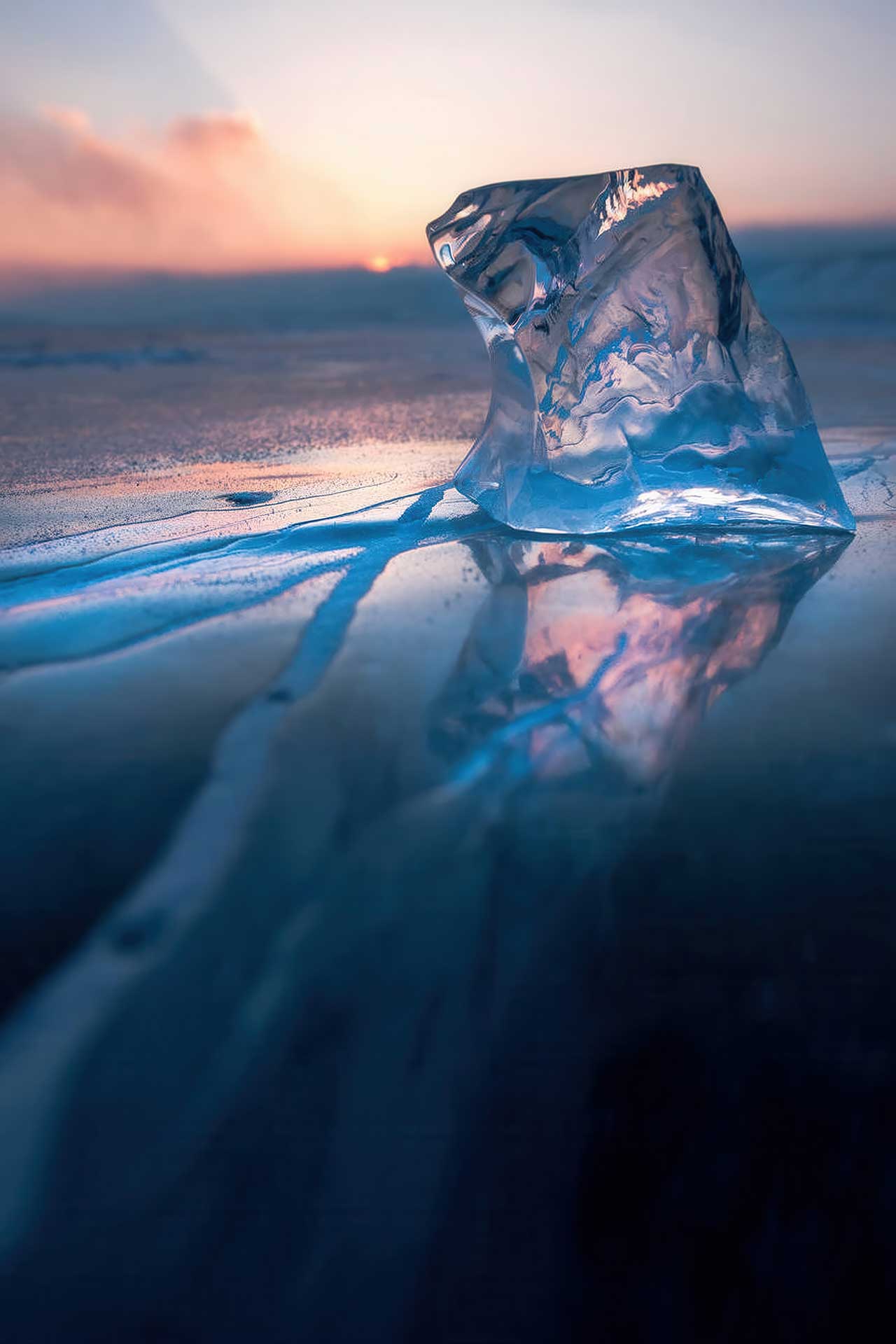
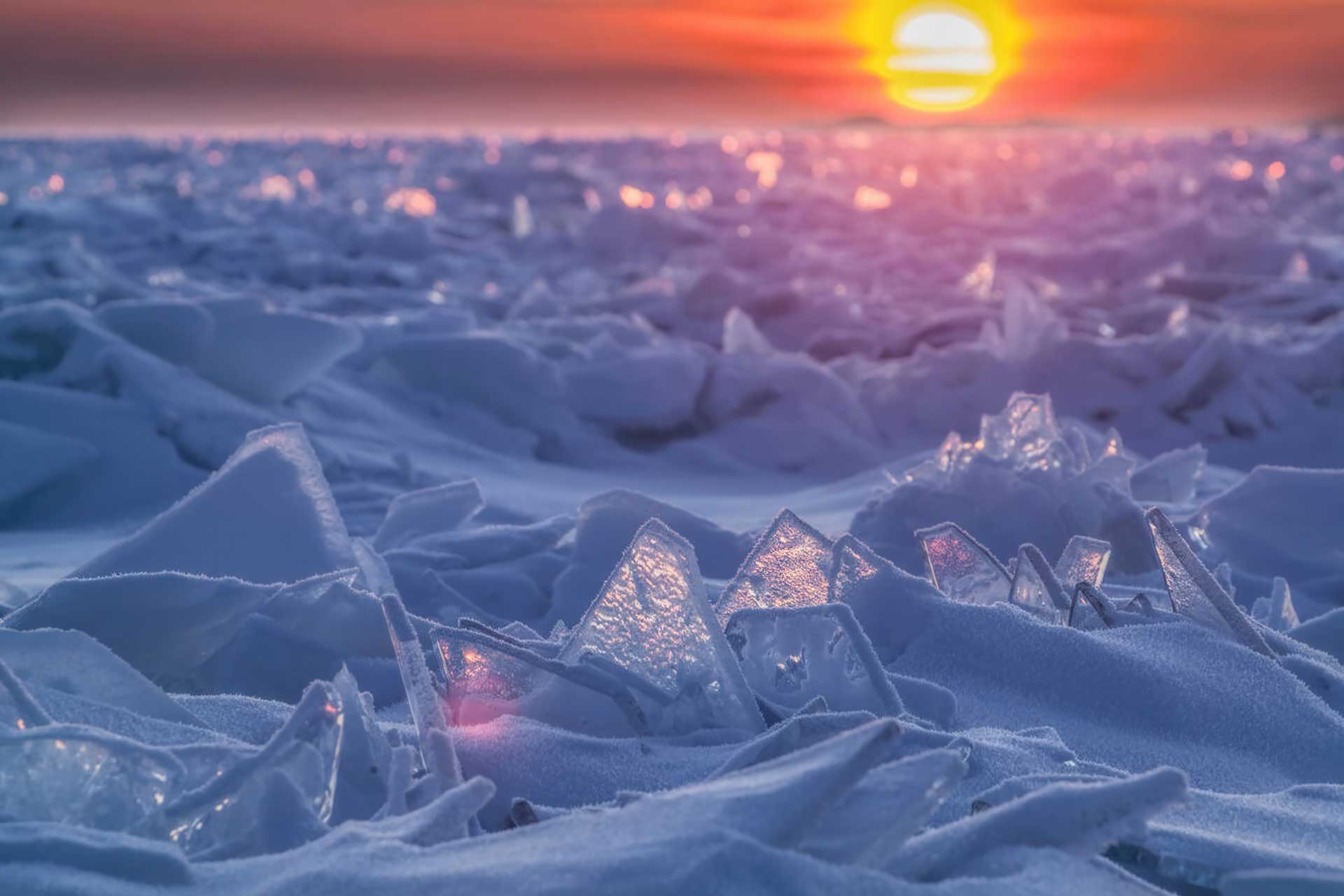
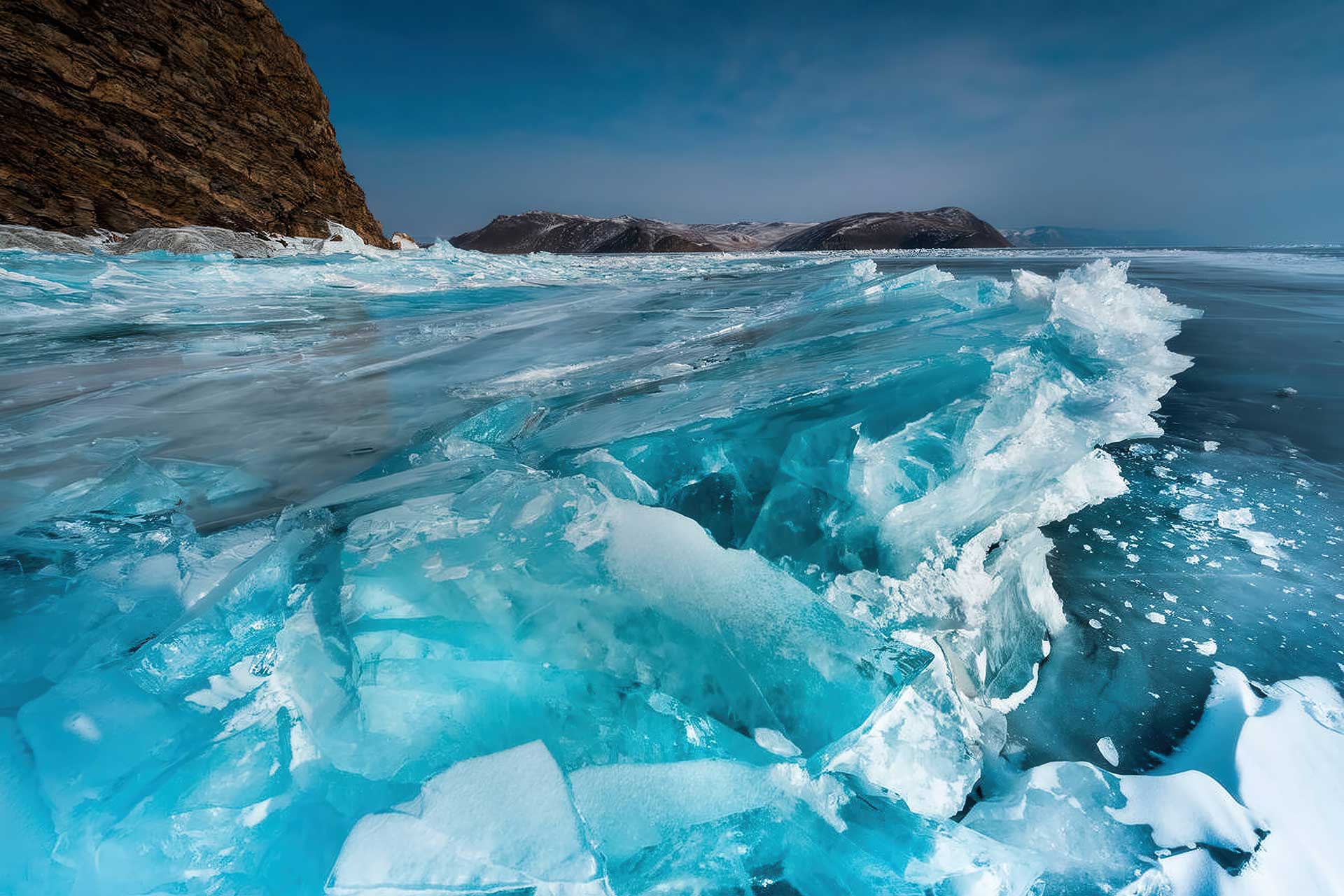
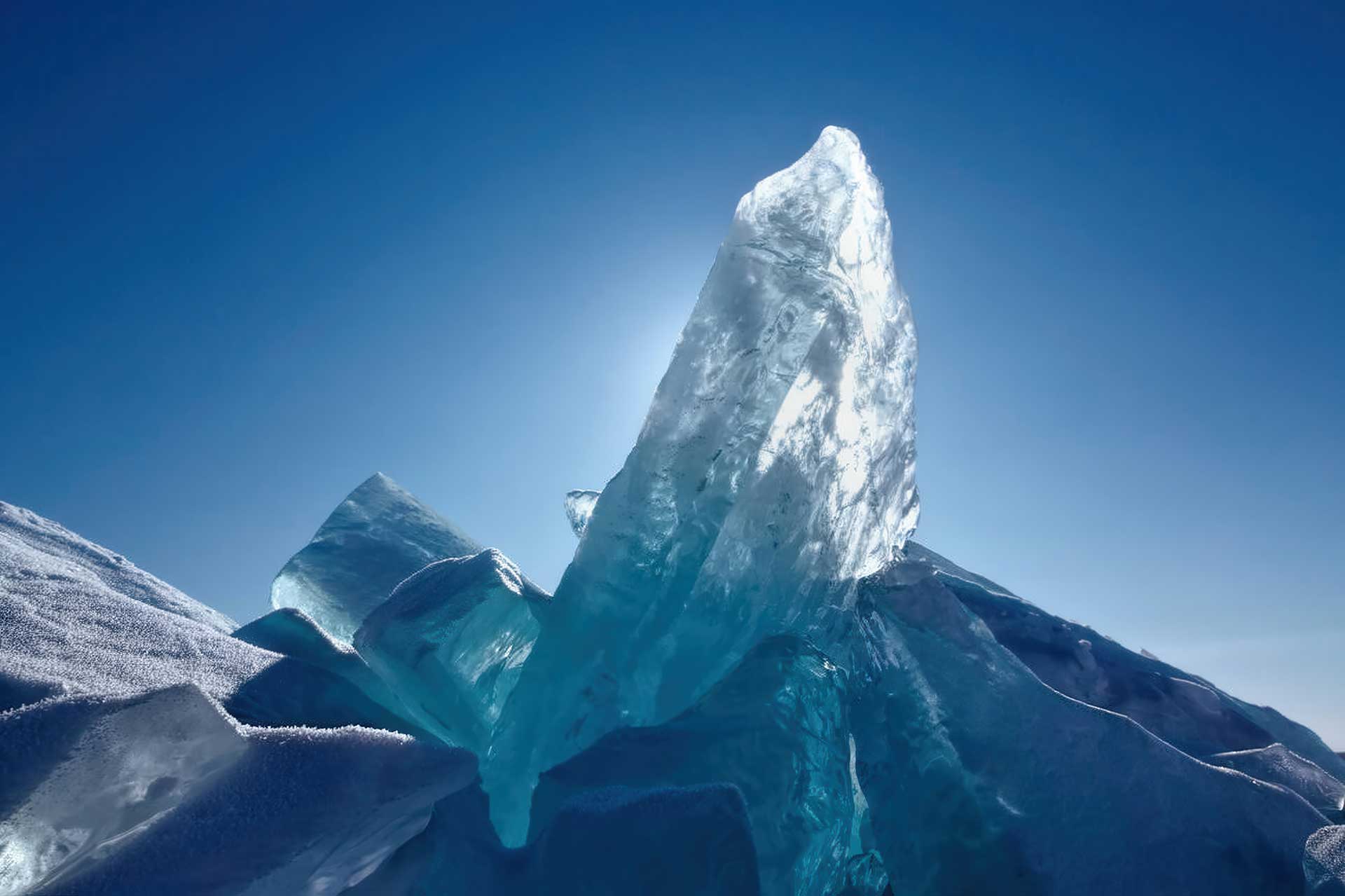
The first step onto Baikal’s frozen skin feels like stepping into the lens itself. Glass thick as a city street, etched with white seams, alive with ancient breath sealed into crystalline bubbles. Wind combs the steppe, light scatters across blue hummocks, and sound travels underfoot like a low drum. This is not a lake in winter. This is a living archive of cold.
Where the planet keeps its memory
Baikal holds a fifth of Earth’s unfrozen fresh water, a volume so immense the mind staggers. It is the oldest and deepest lake on the planet, a rift torn open by geology and filled with time. Its age and isolation created a freshwater Galápagos, famous for endemism and a singular sense of place. UNESCO placed it on the World Heritage list for all of that, and for the way it still teaches us how evolution writes in cold ink.
The day broke clear and cruel. I left Listvyanka before sunrise and watched the color move across the ice like a slow spill of mercury. First steps were cautious, then confident, the way you trust a rope after the second rappel. The surface held my reflection and the sky’s reflection and a thousand white beads of breath threaded in stacks below.
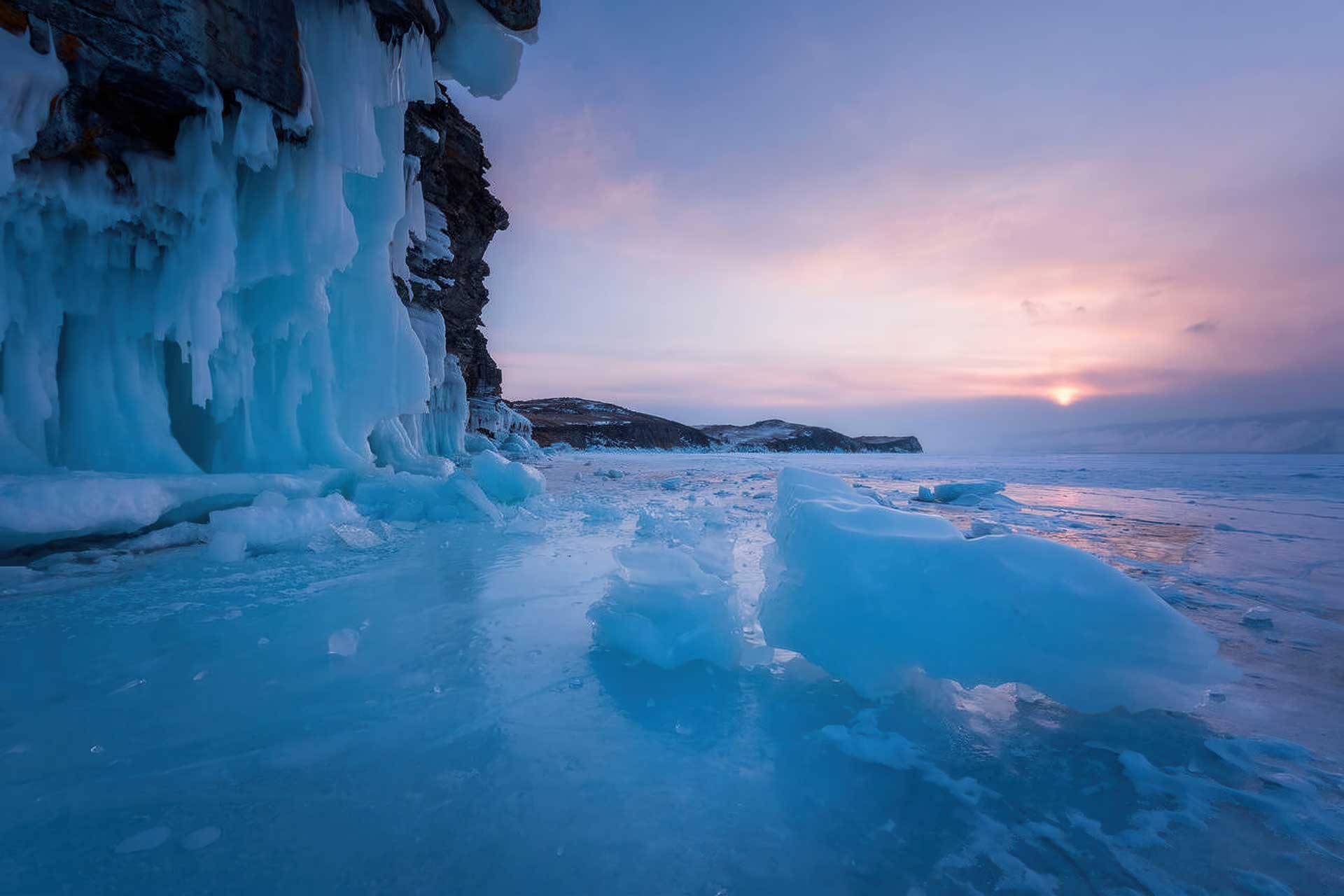
Far out, the wind had teeth. I crouched to photograph a vein running arrow-straight through the lake, then heard it, a long elastic twang followed by a bass note you feel in the ribs. I laughed without meaning to. The sound was fearless. Near Olkhon I crawled into a cave and the world turned blue. Icicles framed the horizon like organ pipes. One wave of the hand set a choir of faint chimes in motion.
I knelt above a glacier of methane bubbles and did not fire the shutter. Some frames need to be kept inside the body. Later, on the long ride back, the ice glowed in the tail lights and the stars looked close enough to thumbprint. I slept with the sound of the lake still moving in my bones.